



Benefits

Deploy machine learning models through UbiFunctions without needing a data science background.

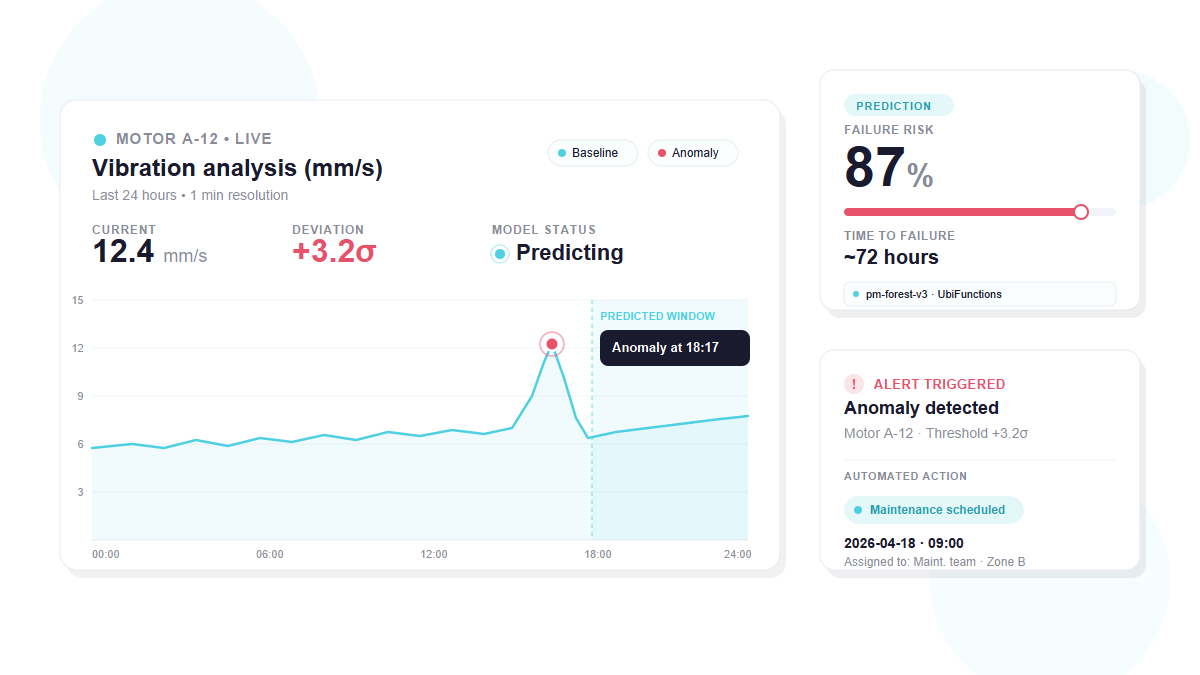
Detect anomalies early and act before failures disrupt your operations.

Schedule maintenance based on actual usage data, not arbitrary time intervals.

Flag unexpected equipment behavior instantly with moving average-based alerts.

Begin with threshold rules and grow into full ML pipelines as your data matures.

Combine data collection, processing, visualization, and prediction in one place.

See It in Action


How it Works
Ubidots Machine Learning connects your industrial assets to a powerful analytics pipeline — turning time-series data into confident maintenance decisions.
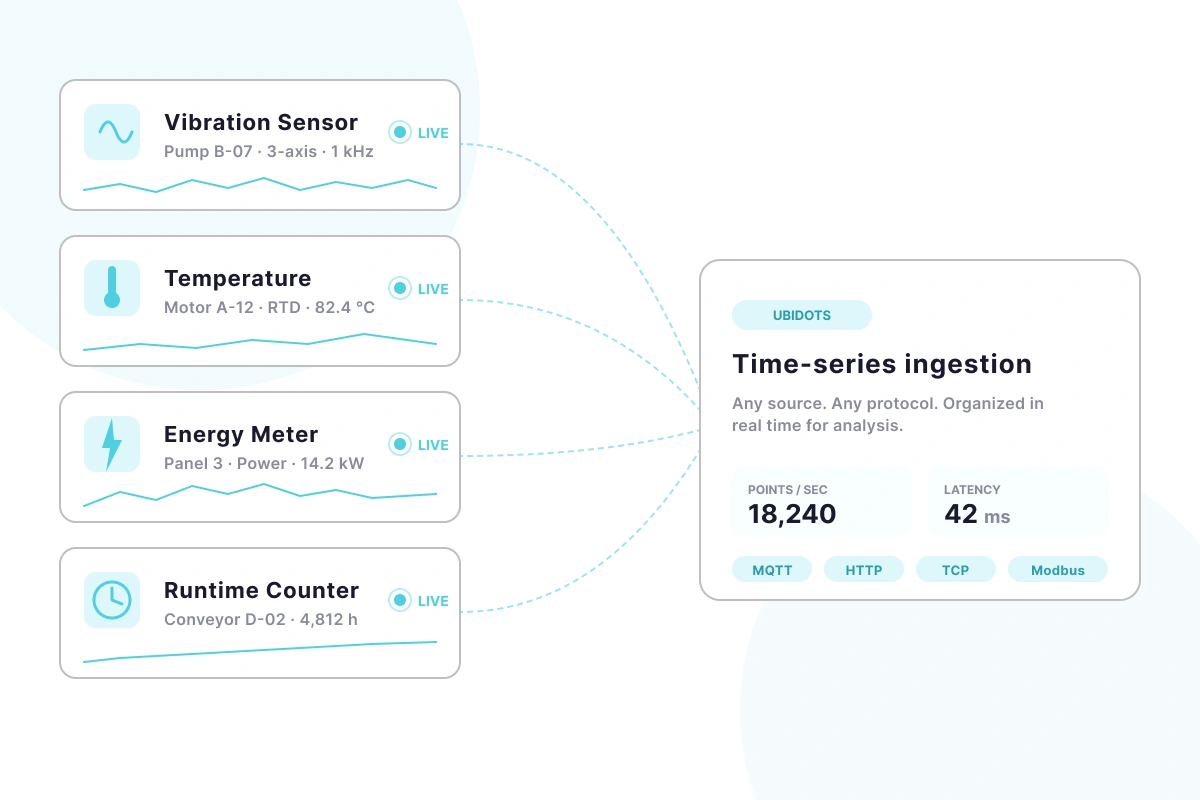
Connect sensors for vibration, temperature, energy, and runtime. Ubidots ingests time-series data from any source and organizes it for analysis in real time.

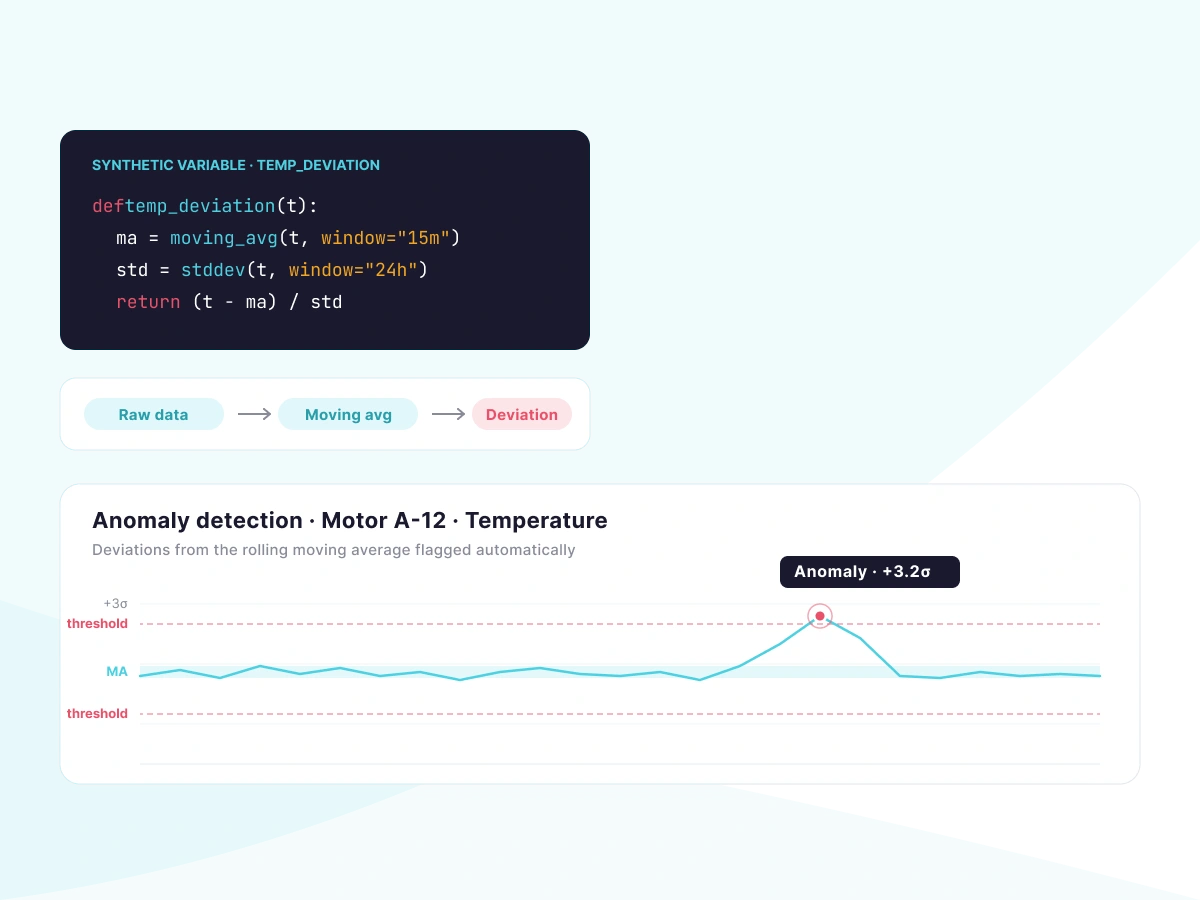
Use synthetic variables and moving averages to track equipment behavior over time. Identify deviations from normal operating patterns with built-in anomaly detection.
Deploy Python-based ML models via UbiFunctions to predict failures before they occur. Trigger automated alerts and maintenance workflows the moment a risk threshold is crossed.
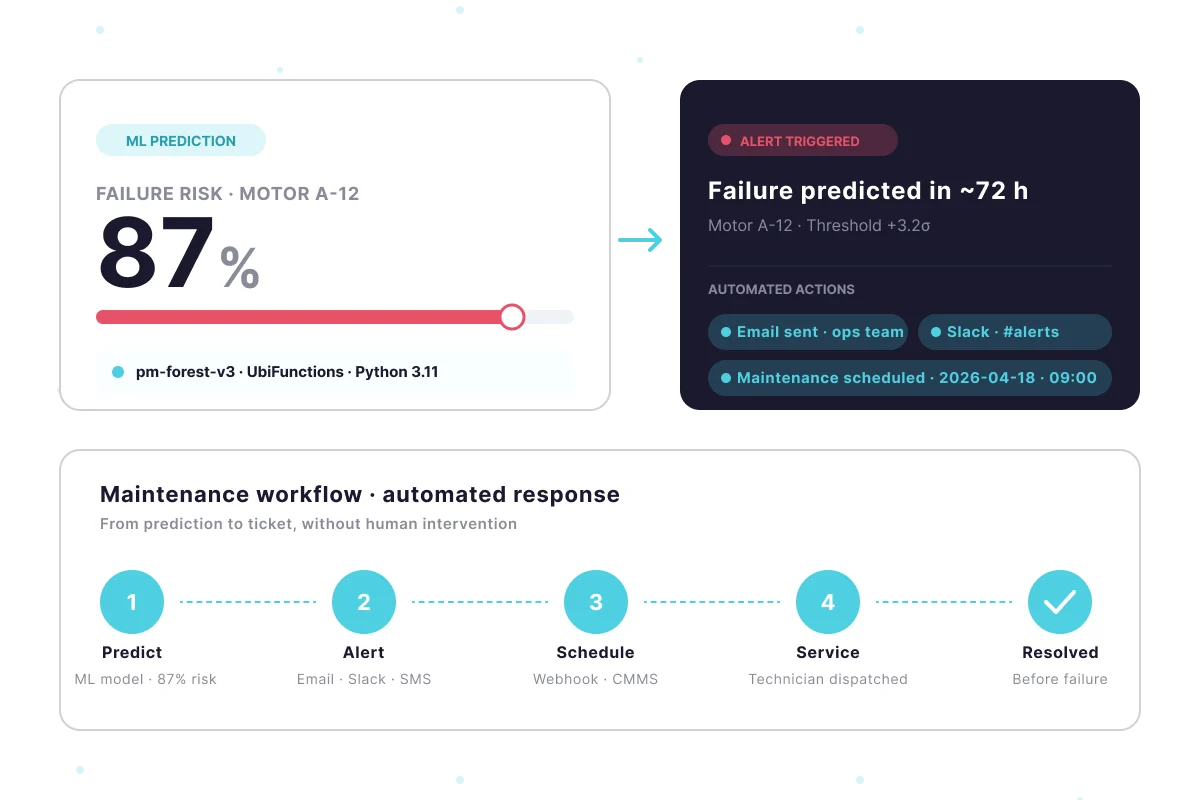

Key Features
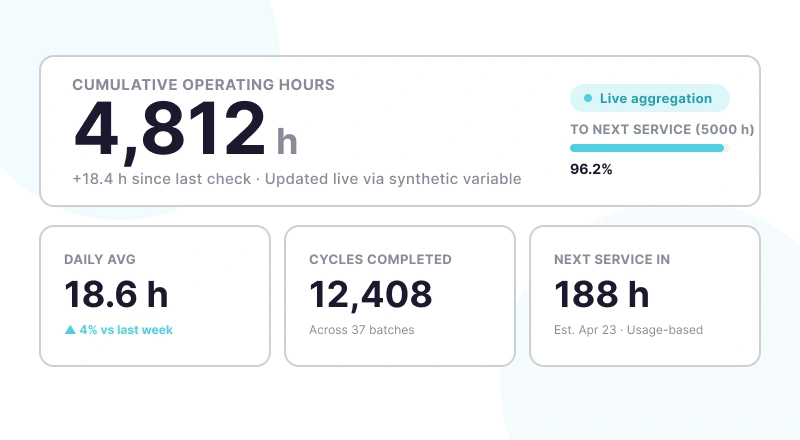
Monitor actual machine usage with synthetic variables to enable usage-based maintenance scheduling.
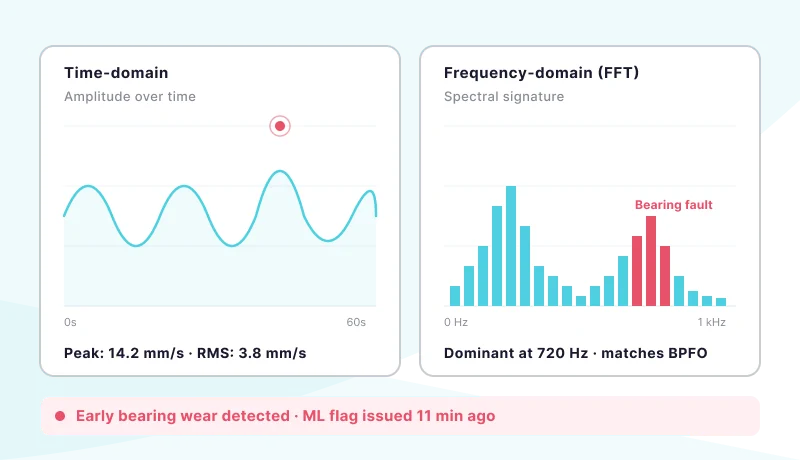
Analyze vibration data in time-domain and frequency-domain to detect early signs of mechanical failure.
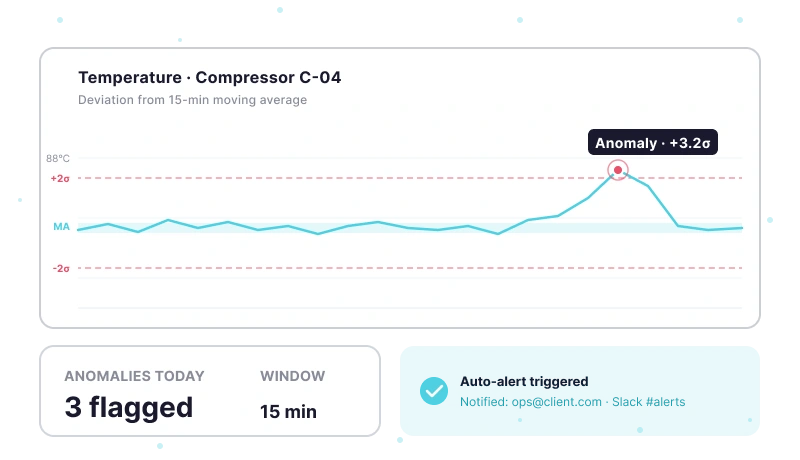
Flag unexpected equipment behavior automatically using configurable moving average algorithms.
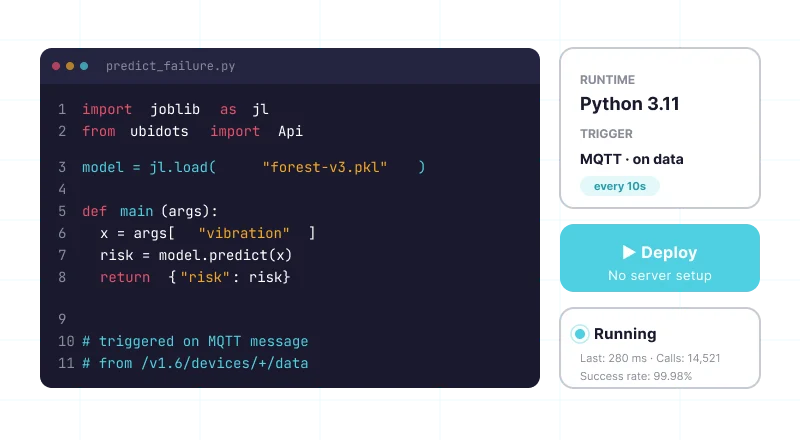
Run Python machine learning models serverlessly via UbiFunctions without managing infrastructure.
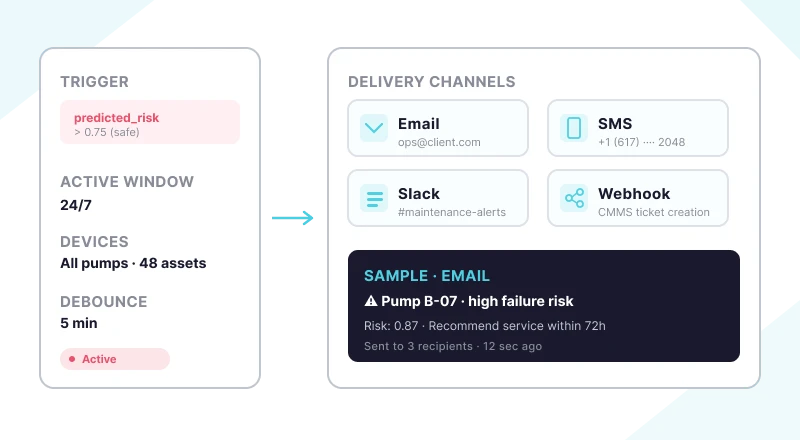
Receive instant notifications when sensor readings exceed predicted safe operating thresholds.
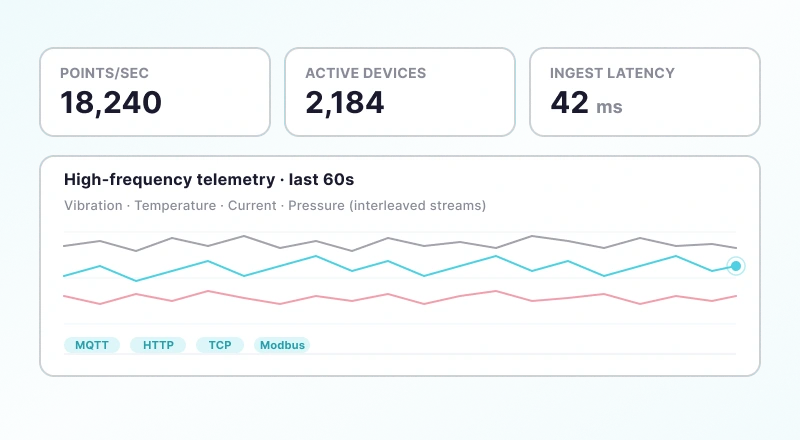
Ingest and process high-frequency sensor data from any IIoT device or protocol.
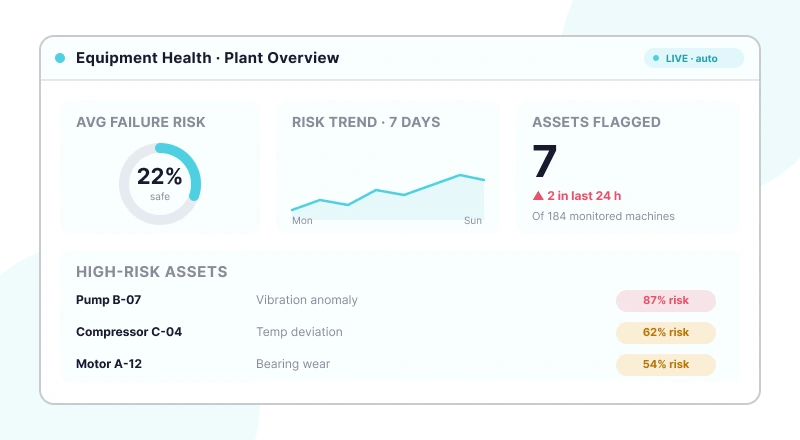
Visualize equipment health, predictions, and maintenance status in customizable live dashboards.
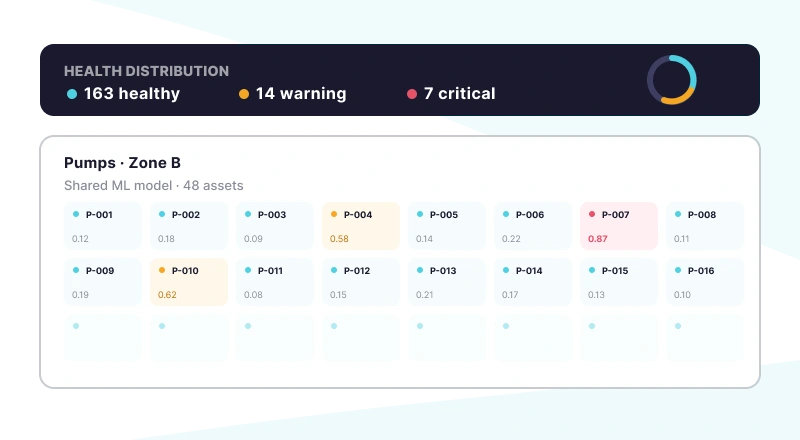
Apply predictive models across entire fleets of machines from a single unified view.
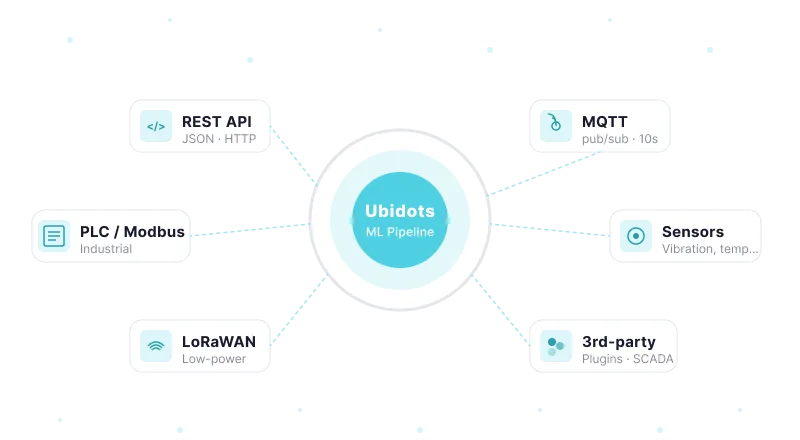
Connect any sensor, PLC, or external system via REST API, MQTT, or native integrations.
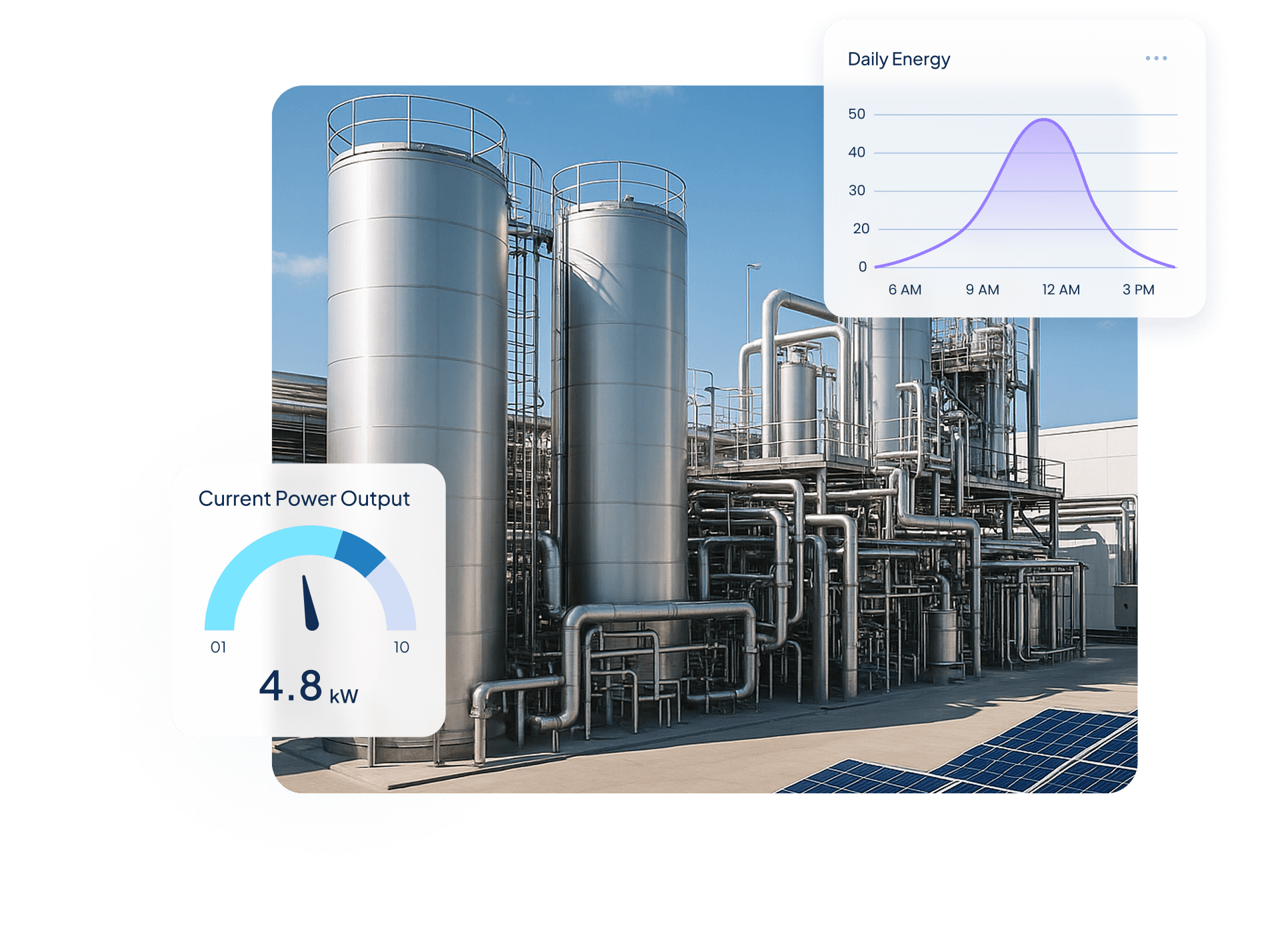
Quantify Environmental uses wireless IoT sensors and Ubidots dashboards to turn utility data into real-time insights, helping industrial clients monitor water, energy, and gas use, detect inefficiencies, and act before costs rise.

$250,000+ in annual client savings through optimized water, electricity, and gas consumption.
Millions of liters of fresh water conserved and tons of CO₂ emissions prevented driving measurable sustainability outcomes.
Improved operational oversight with real-time visibility into utility usage and equipment performance.
Success Story


Use Cases


Steve Barker
Founder & CEO
Prospect Control uses Ubidots to deliver remote tank level monitoring for industrial customers, replacing complex PLC/SCADA setups with a scalable, web-based IoT solution.
Results:

Darryl Schembri
General Manager
AIS Technology uses Ubidots to monitor electricity, water, and gas consumption across multi-tenant buildings, enabling real-time visibility, automated billing, and faster response to inefficiencies.
Results:

Onofre Tamargo
CEO & Cofounder
S4IoT uses Ubidots to remotely monitor irrigation systems in urban gardens, helping clients reduce maintenance costs, prevent plant loss, and shift from manual operations to a scalable subscription-based model.
Results:


Help & Support
Have questions about Ubidots? Here are some ofthe most common queries to help you get started.

No. Ubidots offers a progression from simple to advanced. You can start with threshold-based alerts and usage counters built on synthetic variables — no coding required. As your data matures, you can layer in moving average anomaly detection and eventually deploy Python ML models via UbiFunctions, all within the same platform and without a dedicated data science team.
Ubidots supports four approaches: usage-based maintenance (tracking runtime via synthetic variables), vibration monitoring (time-domain RMS and frequency-domain FFT analysis), moving average anomaly detection (flagging deviations from normal operating patterns), and ML model deployment (running Python classification or regression models via UbiFunctions to predict failures or estimate time-to-failure).
Models are deployed as Python scripts via UbiFunctions, Ubidots’ serverless execution environment. The typical workflow: retrieve the latest sensor values, preprocess data and engineer features like rolling averages, load your trained model, generate a prediction, and write the result back to a Ubidots variable — where it can trigger automated alerts or be visualized on a dashboard.
The most useful variables are runtime status (ON/OFF), cycle counts, vibration RMS or peak values, temperature, and energy consumption. Environmental context like humidity or air quality adds further predictive signal. The key is to start logging immediately — including normal and failure-condition data — since labeled failure events are what make ML models accurate over time.