



Benefits

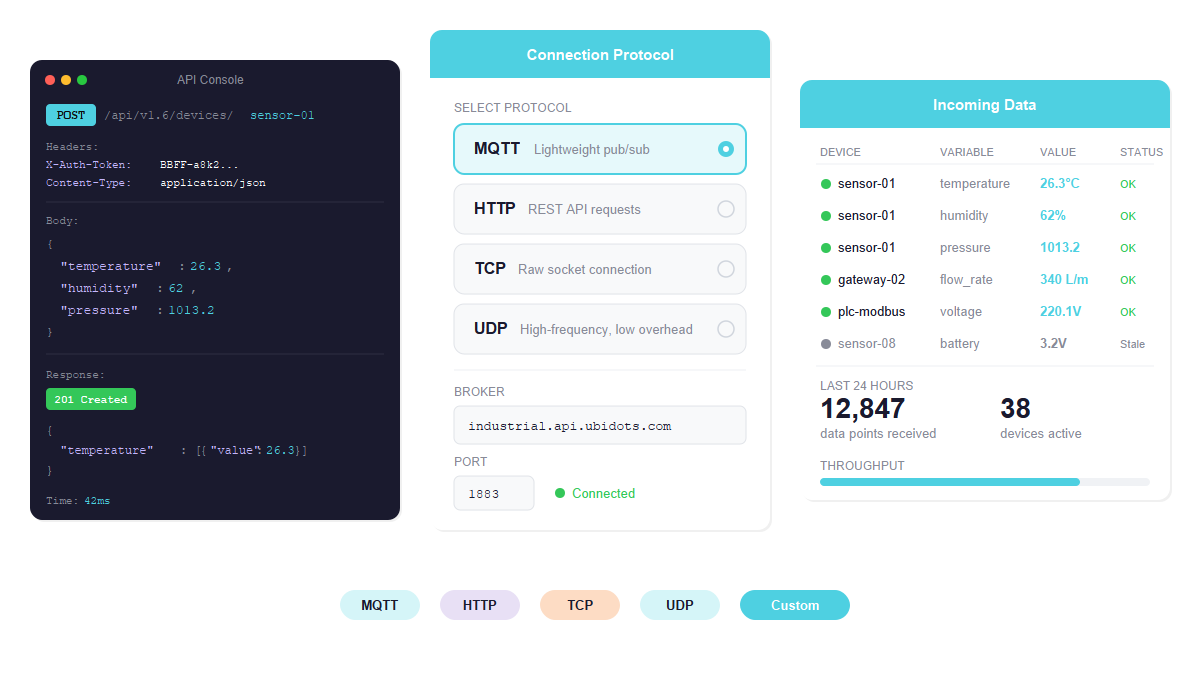
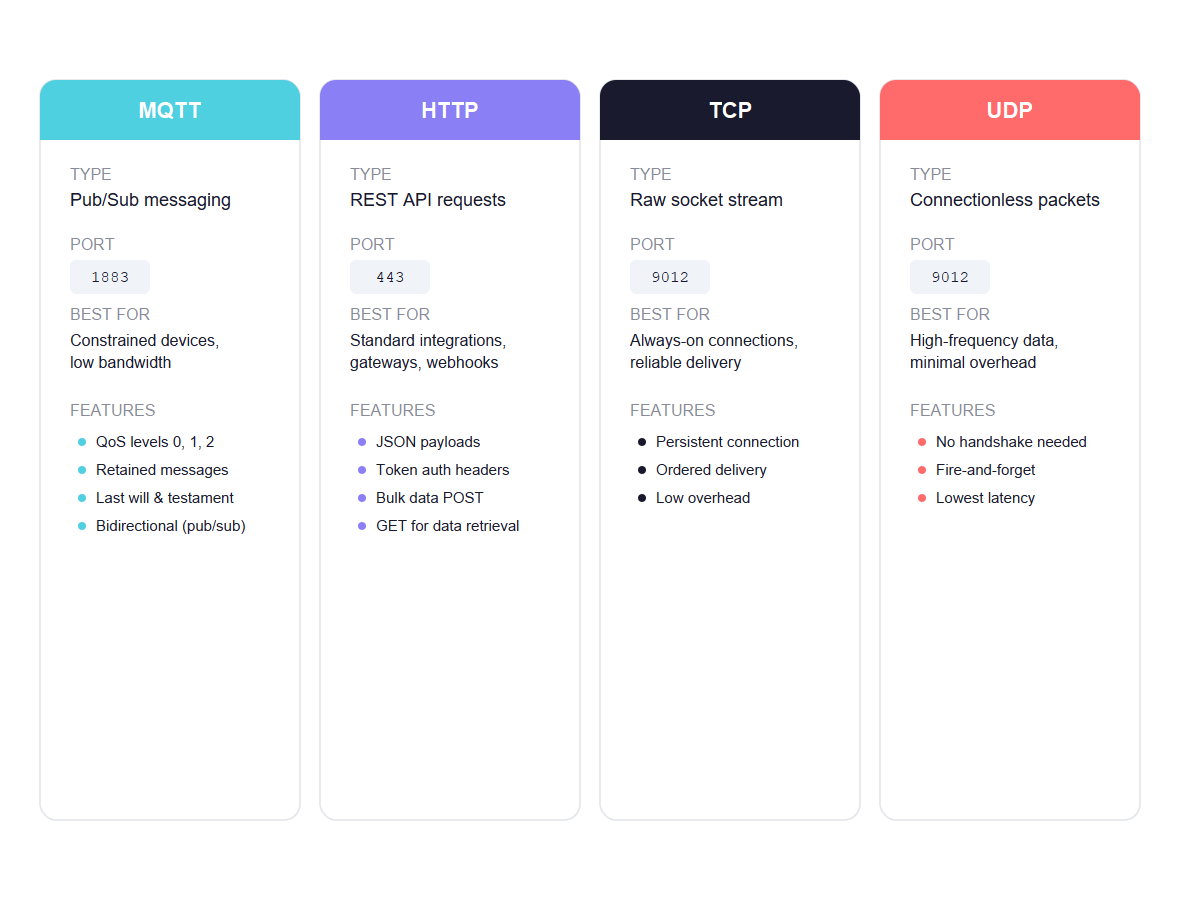
Ingest data over MQTT, HTTP, TCP, or UDP to connect any device regardless of network constraints.

Use MQTT's lightweight publish/subscribe model to push commands and receive data with minimal bandwidth and battery usage.

Each data point carries a value, timestamp, and context metadata—including GPS coordinates—for complete, actionable records.

Build your own ingestion layer to support proprietary protocols or non-standard device communication patterns.

If devices don't send a timestamp, Ubidots assigns one automatically so your data is always time-ordered.

Secure every API call with token authentication for simple, reliable access control across all devices and integrations.

See It in Action


How it Works
Ubidots' IoT-Friendly APIs accept data over multiple industry-standard protocols, making it easy to connect any sensor, gateway, or device—from resource-constrained edge hardware to cloud-based services—without changing your stack.
Send data via HTTP for straightforward REST integrations, MQTT for lightweight pub/sub on constrained devices, or TCP/UDP when you need raw, low-overhead connections. Every protocol writes to the same Ubidots data model.


Each data point holds a numerical value, an optional timestamp, and key-value context metadata. Use context to attach GPS coordinates, equipment tags, or any custom field your application needs.
When standard protocols don't fit, build your own ingestion gateway to translate proprietary formats or bridge non-standard networks directly into Ubidots. No lock-in to a single connectivity pattern.


Key Features

Send data via standard POST requests with JSON payloads and token-based authentication.

Connect devices using lightweight pub/sub messaging with QoS support and retained variable values.

Ingest data over raw TCP connections for low-overhead, always-on device communication.

Send high-frequency data with minimal protocol overhead using connectionless UDP.
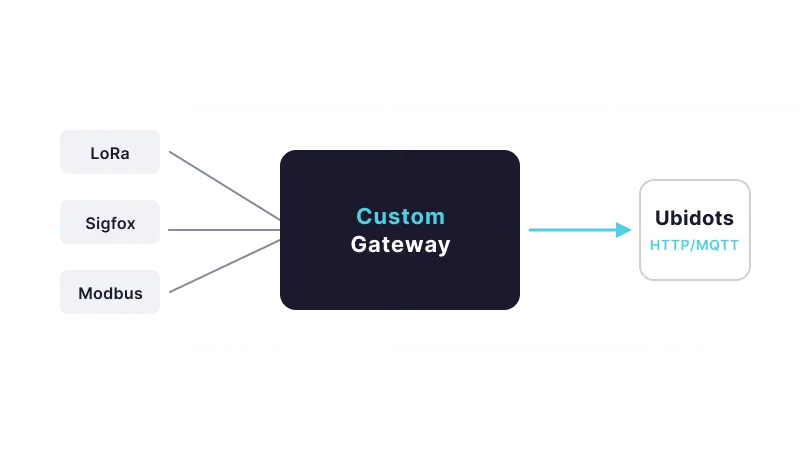
Build your own ingestion layer to support any proprietary protocol or non-standard device.

Attach values, timestamps, and key-value context metadata—including GPS coordinates—to every data point.

Ubidots assigns server-side timestamps automatically when devices omit them.

Use MQTT subscriptions to push commands and configuration updates back to connected devices in real time.

Secure all API access with per-device or per-application tokens for granular access control.
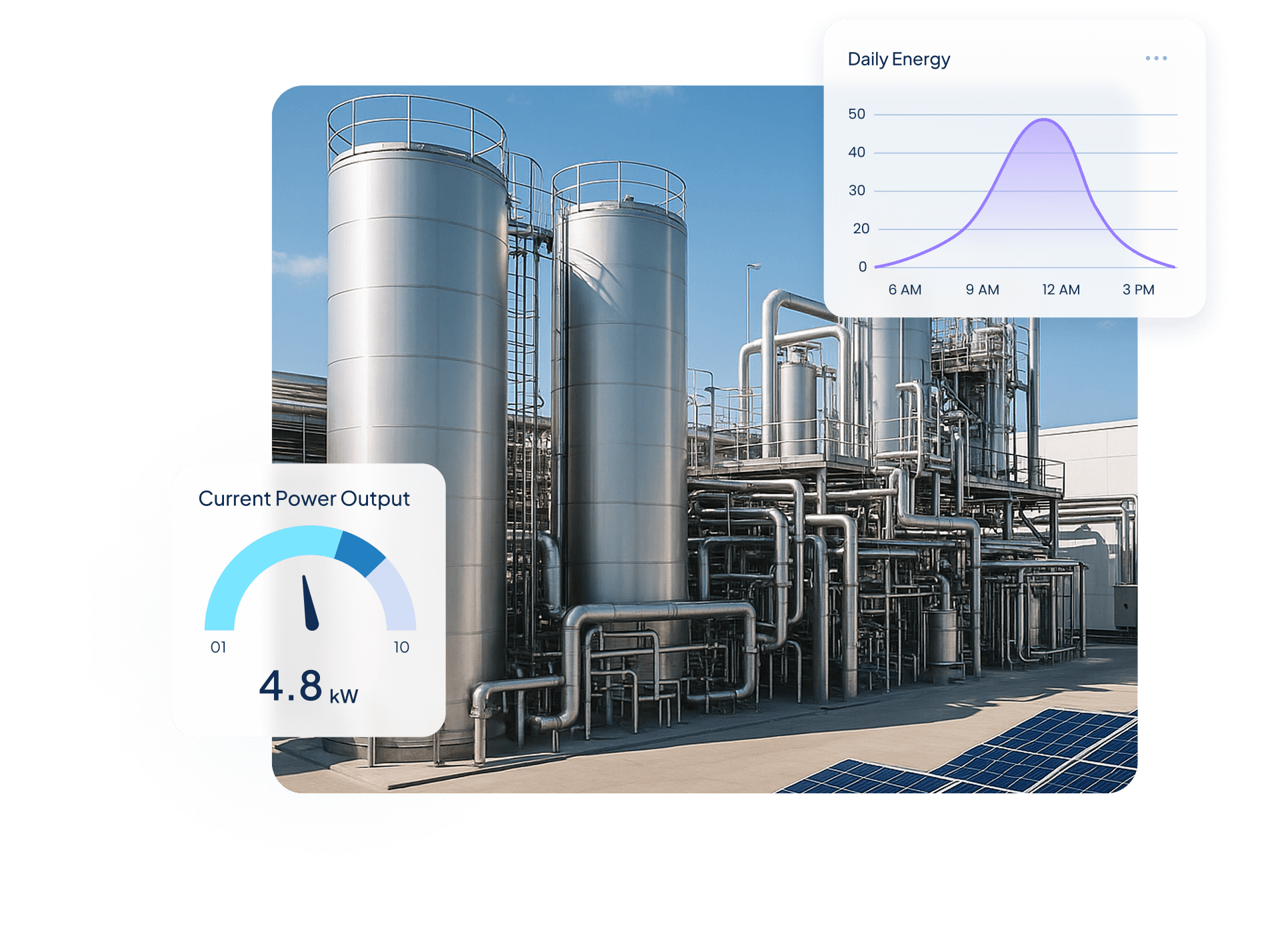
Quantify Environmental uses wireless IoT sensors and Ubidots dashboards to turn utility data into real-time insights, helping industrial clients monitor water, energy, and gas use, detect inefficiencies, and act before costs rise.

$250,000+ in annual client savings through optimized water, electricity, and gas consumption.
Millions of liters of fresh water conserved and tons of CO₂ emissions prevented driving measurable sustainability outcomes.
Improved operational oversight with real-time visibility into utility usage and equipment performance.
Success Story


Use Cases


Steve Barker
Founder & CEO
Prospect Control uses Ubidots to deliver remote tank level monitoring for industrial customers, replacing complex PLC/SCADA setups with a scalable, web-based IoT solution.
Results:


Darryl Schembri
General Manager
AIS Technology uses Ubidots to monitor electricity, water, and gas consumption across multi-tenant buildings, enabling real-time visibility, automated billing, and faster response to inefficiencies.
Results:


Onofre Tamargo
CEO & Cofounder
S4IoT uses Ubidots to remotely monitor irrigation systems in urban gardens, helping clients reduce maintenance costs, prevent plant loss, and shift from manual operations to a scalable subscription-based model.
Results:


Help & Support
Have questions about Ubidots? Here are some ofthe most common queries to help you get started.

Ubidots supports four protocols: HTTP (REST API with JSON payloads and token authentication), MQTT (lightweight pub/sub messaging with QoS support), TCP (raw connections for low-overhead communication), and UDP (connectionless for high-frequency data). For hardware using proprietary formats, you can also build a custom ingestion gateway that translates payloads before they reach Ubidots.
HTTP uses a request-response model where each device sends a POST with a JSON payload — straightforward but with higher per-message overhead. MQTT uses a persistent publish/subscribe model, better suited for constrained devices with limited bandwidth or battery life. Both write to the same Ubidots data model, and MQTT additionally supports cloud-to-device messaging via subscriptions.
Yes. Ubidots supports cloud-to-device communication via MQTT subscriptions. Devices that maintain an active MQTT connection can subscribe to topics and receive commands, configuration changes, or variable updates pushed from Ubidots in real time. This makes MQTT the preferred protocol for bidirectional device communication in Ubidots deployments.
Yes. Every Ubidots data point supports a value, an optional timestamp, and key-value context metadata — including GPS coordinates. If a device omits a timestamp, Ubidots automatically assigns a server-side timestamp to keep data properly ordered. This makes it easy to build location-aware or time-critical IoT applications without additional preprocessing.