


Benefits

Control exactly what each user can see and interact with. Assign roles and organize users so everyone — from field technicians to executives to customers — sees only what's relevant to them.
Organizations can represent customers, departments, or end users. Reflect how your operation actually works — not the other way around.

Whether managing ten users or thousands, replicate and extend your user structure as you grow. Assign devices, dashboards, and events to new organizations without rebuilding from scratch.

Serve multiple clients from one platform while keeping their data completely separate. Offer each client a white-labeled experience without duplicating your infrastructure.


See It in Action


How it Works
Ubidots gives you a flexible user management framework that adapts to your business model — whether you're managing internal teams, serving external clients, or deploying IoT products at scale.



Key Features
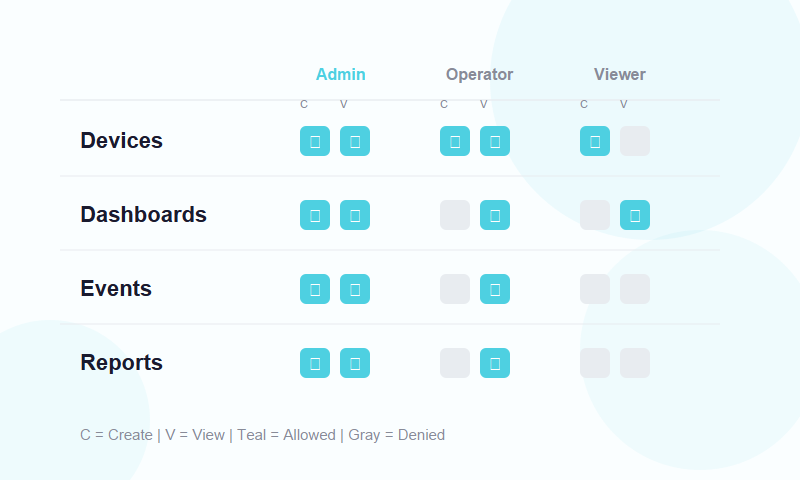
Tailor permissions so operators, engineers, and managers access only what they need. Simplify coordination and security with custom roles.
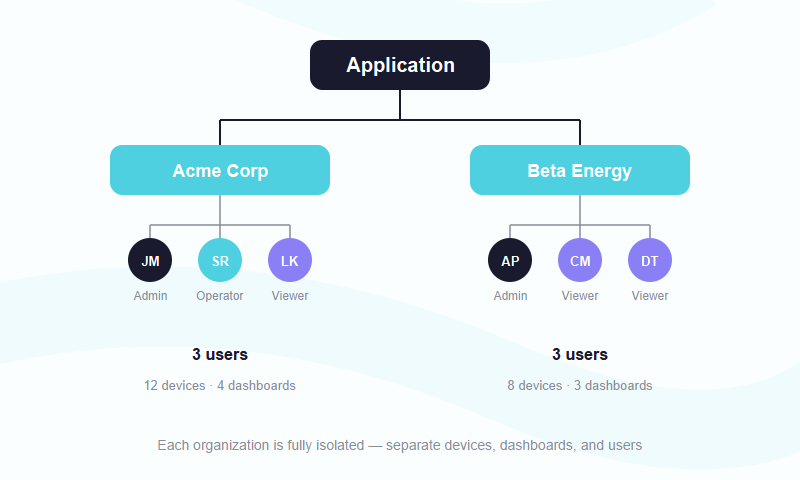
Subdivide your application into self-contained units, each with their own devices, dashboards, and events.

Define what each role can see, create, edit, or delete — tailored to each person's responsibilities.

Serve multiple clients from a single platform while keeping their data and access completely isolated.

Assign dedicated dashboards to each organization so every user sees only what's relevant to them.

Replicate and extend your user structure as your deployment grows, without rebuilding from scratch.

Deliver a customized, branded experience to each client app independently.

Add users to organizations with a simple invitation flow and assign their roles from day one.
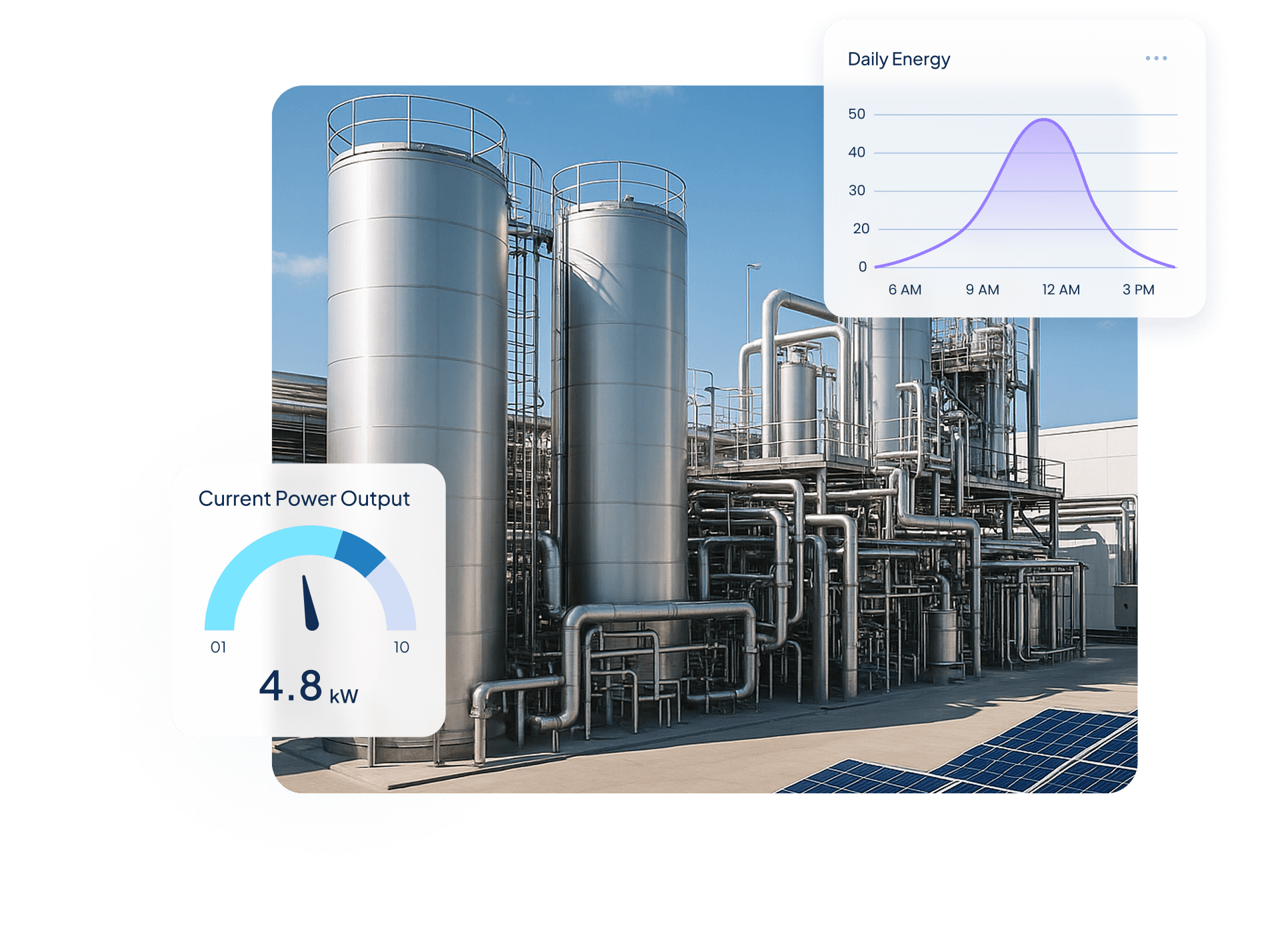
Quantify Environmental uses wireless IoT sensors and Ubidots dashboards to turn utility data into real-time insights, helping industrial clients monitor water, energy, and gas use, detect inefficiencies, and act before costs rise.

$250,000+ in annual client savings through optimized water, electricity, and gas consumption.
Millions of liters of fresh water conserved and tons of CO₂ emissions prevented driving measurable sustainability outcomes.
Improved operational oversight with real-time visibility into utility usage and equipment performance.
Success Story


Use Cases


Steve Barker
Founder & CEO
Prospect Control uses Ubidots to deliver remote tank level monitoring for industrial customers, replacing complex PLC/SCADA setups with a scalable, web-based IoT solution.
Results:


Darryl Schembri
General Manager
AIS Technology uses Ubidots to monitor electricity, water, and gas consumption across multi-tenant buildings, enabling real-time visibility, automated billing, and faster response to inefficiencies.
Results:


Onofre Tamargo
CEO & Cofounder
S4IoT uses Ubidots to remotely monitor irrigation systems in urban gardens, helping clients reduce maintenance costs, prevent plant loss, and shift from manual operations to a scalable subscription-based model.
Results:


Help & Support
Have questions about Ubidots? Here are some ofthe most common queries to help you get started.

Ubidots includes four built-in roles: Explorers (can create, edit, and delete dashboards and events, with view-only access to devices and variables), Viewers (view-only access to dashboards, devices, and variables — no create, edit, or delete), Dashboard Viewers (restricted to viewing dashboards only), and Managers (full admin capabilities except managing end-users). Custom roles can also be created.
Yes. Beyond the four built-in roles, Ubidots lets you define custom roles with any combination of create, view, edit, and delete permissions across dashboards, devices, events, and variables. Custom roles are configured per organization, giving you precise control over what each user type can see and do within your IoT application.
Ubidots multi-tenancy works at two levels. Organizations isolate devices, dashboards, events, and users within an App — suitable when clients need separate data without distinct branding. Apps provide a second layer: each App is an independent IoT portal with its own white-label branding, login portal, and feature configuration. A single Ubidots account can host multiple Apps, letting you deliver a fully branded, isolated experience to each client.
Yes. Each organization in Ubidots is fully isolated — it has its own devices, dashboards, events, and users. Clients assigned to separate organizations see only their own data and cannot access other organizations’ resources. Combined with white-labeling, you can serve multiple clients from one account while each experiences a fully branded, private IoT application.