Industries
Monitor asset condition in real time, detect anomalies early, and schedule maintenance before failures disrupt your operations.





Benefits

Detect equipment degradation signals early — temperature drift, abnormal vibration, unusual current draw — and trigger maintenance actions before failure reaches the production floor.

Replace time-based maintenance schedules with condition-based strategies that service equipment exactly when needed — reducing unnecessary interventions and maximizing asset service life.

Deploy machine learning models that analyze historical sensor data to identify failure patterns, estimate remaining useful life, and generate predictive maintenance recommendations.

IoT in Action


Product Overview
Turn continuous sensor data from your equipment into the failure predictions, anomaly alerts, and maintenance insights that keep assets running longer and downtime costs lower.
Time-based maintenance schedules treat every piece of equipment the same — whether it’s running perfectly or showing early signs of failure. Ubidots gives maintenance engineers and reliability teams continuous visibility into actual equipment condition — vibration, temperature, current draw, runtime — with automated alerts that trigger when readings start trending toward failure, not after it happens.


Anomaly detection catches what fixed thresholds miss — subtle deviations that accumulate over time before a dramatic failure. With Ubidots, maintenance teams can deploy Python-based machine learning models serverlessly via UbiFunctions to analyze sensor history, identify failure signatures, and estimate remaining useful life. The result: maintenance driven by data, not guesswork.
Whether you’re tracking a single critical asset or deploying condition monitoring across hundreds of machines in multiple facilities, Ubidots scales with your operation. Connect sensors via MQTT, HTTP, or industrial gateways, organize assets by type, location, or criticality, and give every maintenance role — technician, engineer, plant manager — the view they need to act.


Key Features
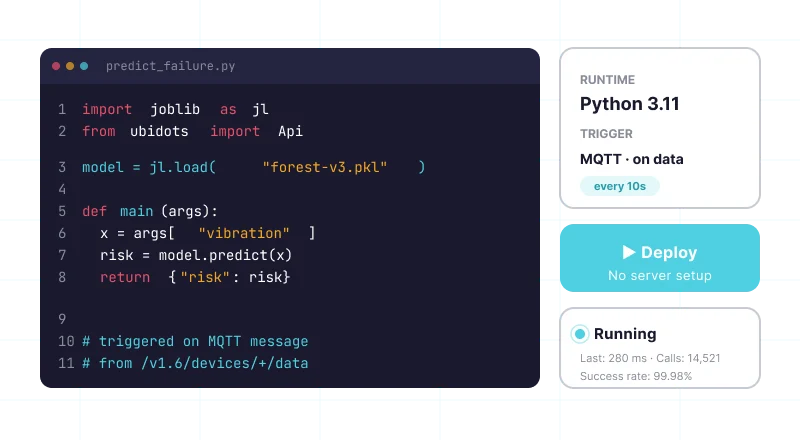
Run Python machine learning models serverlessly via UbiFunctions without managing infrastructure.
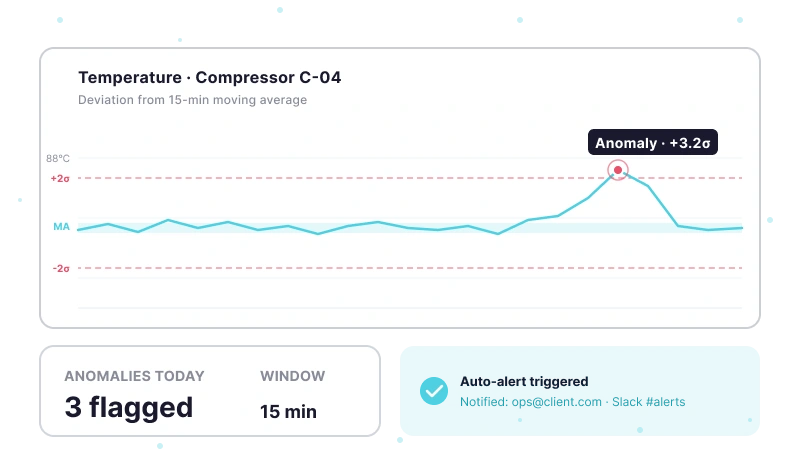
Flag unexpected equipment behavior automatically using configurable moving average algorithms.
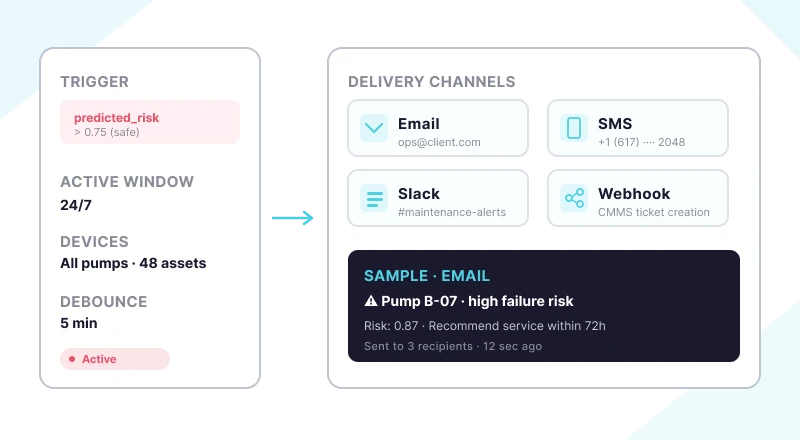
Receive instant notifications when sensor readings exceed predicted safe operating thresholds.
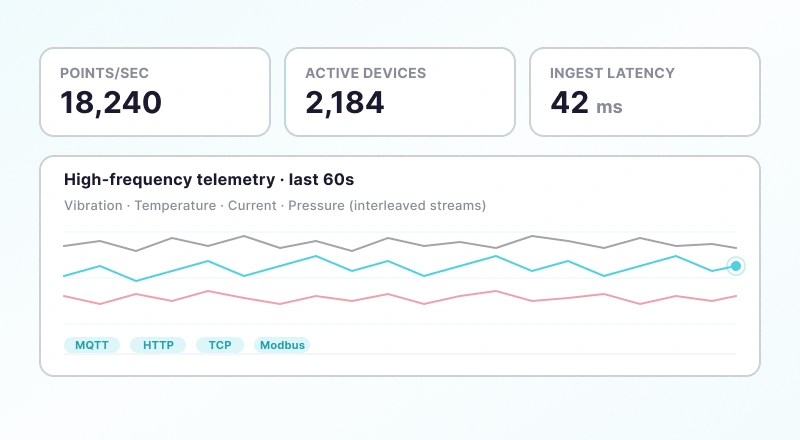
Ingest and process high-frequency sensor data from any IIoT device or protocol.
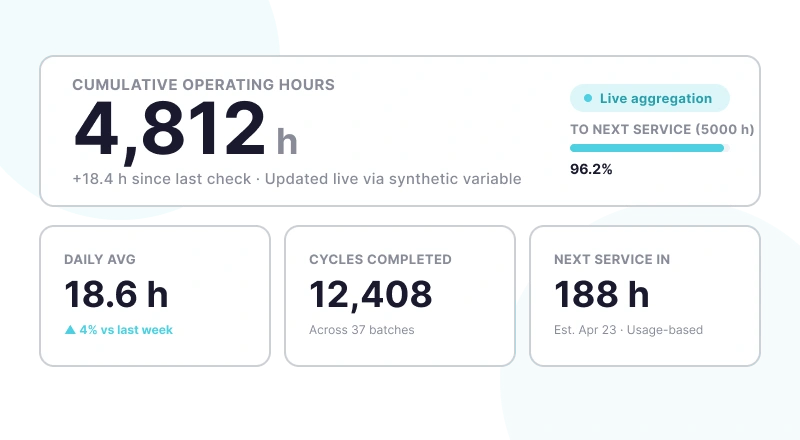
Monitor actual machine usage with synthetic variables to enable usage-based maintenance scheduling.
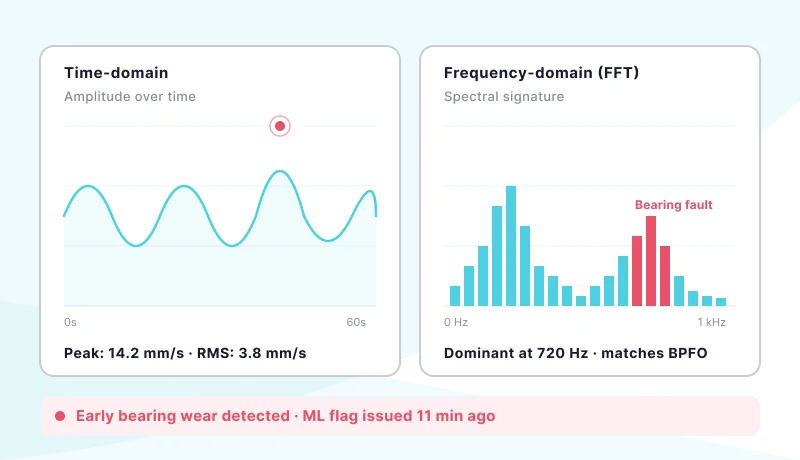
Analyze vibration data in time-domain and frequency-domain to detect early signs of mechanical failure.
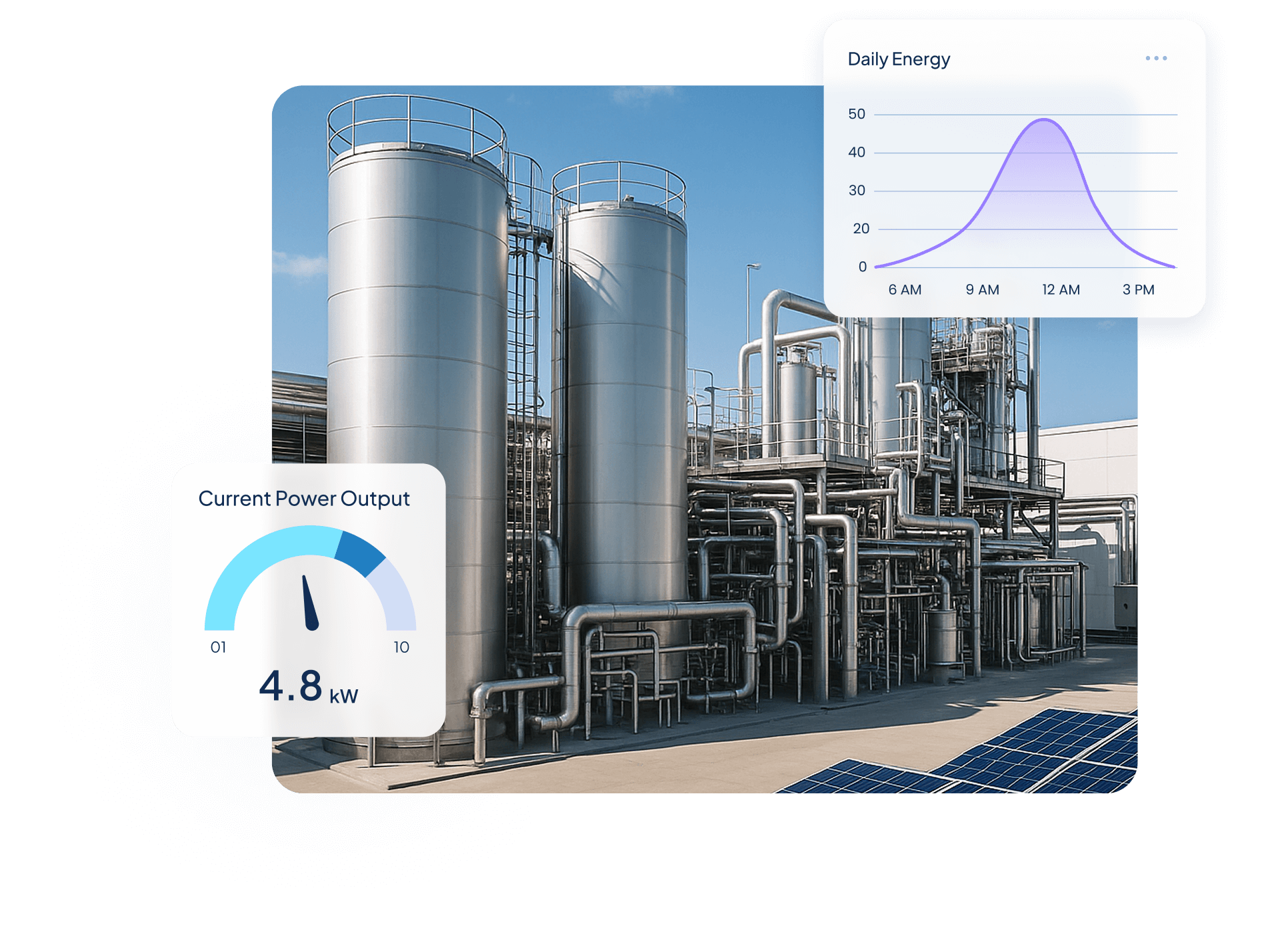
Quantify Environmental uses wireless IoT sensors and Ubidots dashboards to turn utility data into real-time insights, helping industrial clients monitor water, energy, and gas use, detect inefficiencies, and act before costs rise.

$250,000+ in annual client savings through optimized water, electricity, and gas consumption.
Millions of liters of fresh water conserved and tons of CO₂ emissions prevented driving measurable sustainability outcomes.
Improved operational oversight with real-time visibility into utility usage and equipment performance.
Success Story


Use Cases


Steve Barker
Founder & CEO
Prospect Control uses Ubidots to deliver remote tank level monitoring for industrial customers, replacing complex PLC/SCADA setups with a scalable, web-based IoT solution.
Results:

Darryl Schembri
General Manager
AIS Technology uses Ubidots to monitor electricity, water, and gas consumption across multi-tenant buildings, enabling real-time visibility, automated billing, and faster response to inefficiencies.
Results:


Onofre Tamargo
CEO & Cofounder
S4IoT uses Ubidots to remotely monitor irrigation systems in urban gardens, helping clients reduce maintenance costs, prevent plant loss, and shift from manual operations to a scalable subscription-based model.
Results:


Help & Support
Have questions about Ubidots? Here are some ofthe most common queries to help you get started.

No. Most teams start with threshold alerts and runtime counters built from Synthetic Variables, which require no code. As data accumulates, you can add moving average anomaly detection to catch gradual deviations that fixed thresholds miss. Machine learning is the final step: Python models deployed through UbiFunctions once you have enough history, including failure events, to train them. All three stages run on the same platform, so you don't rebuild anything as your maintenance program matures.
The most useful signals are runtime status, cycle counts, vibration (RMS or peak values), temperature, current draw, and energy consumption, with environmental context such as humidity adding further signal. Start logging immediately, and record failures and repairs as they happen: labeled failure events are what later make anomaly detection and ML models accurate. Ubidots ingests these signals over MQTT, HTTP, or industrial gateways and stores them as time-series variables ready for alerting and analysis.
Yes, with a model you deploy. UbiFunctions runs Python machine learning models serverlessly: a scheduled function reads recent sensor data, engineers features such as rolling averages, runs a regression model to estimate time to failure, and writes the result back to a Ubidots variable. That estimate can then drive alerts and maintenance dashboards like any other reading. Accuracy depends on your data — the model needs historical sensor data that includes past failures to learn from.
Yes. Synthetic Variables can accumulate runtime hours or cycle counts from a machine's status signal, with no code. An event then fires when the counter reaches the service interval, notifying the maintenance team by email, SMS, or Slack, or calling a webhook to open a work order in your maintenance system. Equipment is serviced when its actual usage calls for it, rather than on a calendar that ignores how hard it has been run.