Industries
Optimize machine performance, minimize downtime, and maximize productivity with IoT.





Benefits

Utilize real-time data to predict equipment failure preemptively, reducing unplanned downtime, extending asset lifecycles, and lowering maintenance and operational costs.

Monitor everything from machine performance to the environment and every device in your network, giving you a complete view for smarter decision-making.

Integrate easily with legacy systems, industrial controllers, and factory equipment through MQTT, Modbus, and other IoT protocols.

IoT in Action


Product Overview
Transform raw sensor data into real-time insights that boost uptime, improve efficiency, and help your factory stay ahead of issues before they escalate.
With Ubidots, your factory can communicate with you in real time, sharing powerful insights through clean dashboards and triggering custom alerts.
Ubidots empowers manufacturers and control system integrators to develop data-driven, cloud-based applications.


In today’s fast-paced global manufacturing ecosystem, inefficiencies such as downtime, wasted resources, and energy loss stifle productivity. Smart factory integrators turn to Ubidots for powerful sensor data collection, analytics, and visualizations that help detect machine failures, energy-saving opportunities, and track manufacturing KPIs such as Overall Equipment Effectiveness (OEE).

Key Features
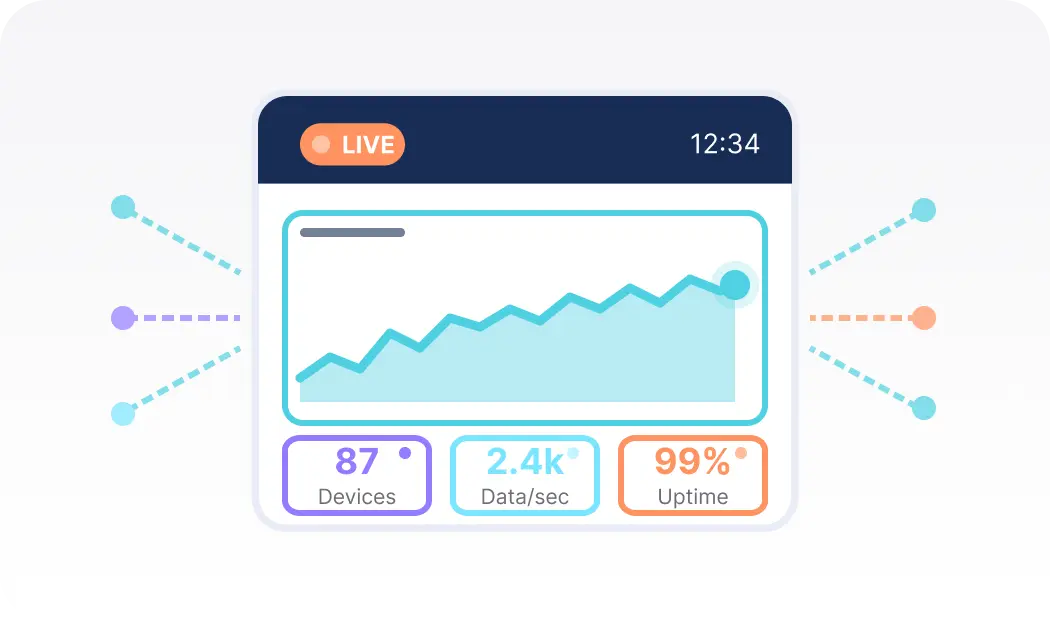
See IoT data update instantly. Track live operations or pause to analyze, ensuring full visibility and control.

Use machine learning to analyze sensor history, predict failures in your manufacturing equipment, and optimize maintenance to avoid unplanned downtime.

Create real-time alerts for performance issues and trigger automated maintenance to cut downtime and extend asset life.

Run custom logic, process real-time data, and trigger actions in the cloud with serverless functions that simplify complex workflows.
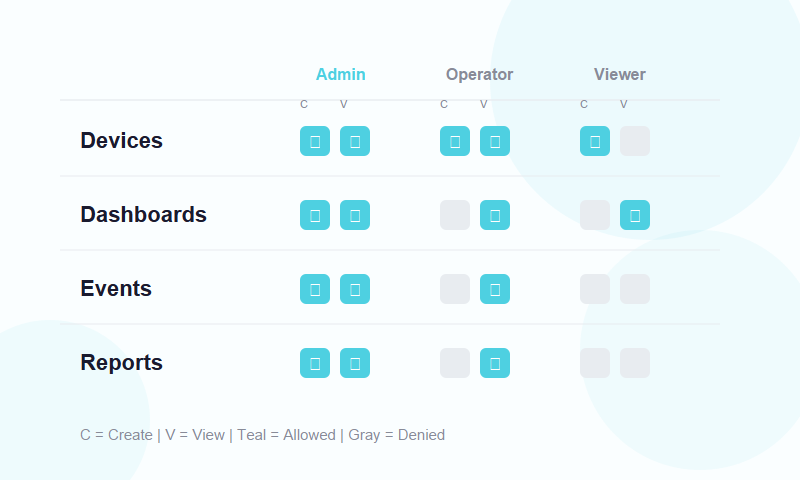
Tailor permissions so operators, engineers, and managers access only what they need. Simplify coordination and security with custom roles.

Store machine performance and production data for 10+ years with the Enterprise Extended Storage add-on, and access historical data for analysis or audits.
Quantify Environmental uses wireless IoT sensors and Ubidots dashboards to turn utility data into real-time insights, helping industrial clients monitor water, energy, and gas use, detect inefficiencies, and act before costs rise.

$250,000+ in annual client savings through optimized water, electricity, and gas consumption.
Millions of liters of fresh water conserved and tons of CO₂ emissions prevented driving measurable sustainability outcomes.
Improved operational oversight with real-time visibility into utility usage and equipment performance.
Success Story


Use Cases


Steve Barker
Founder & CEO
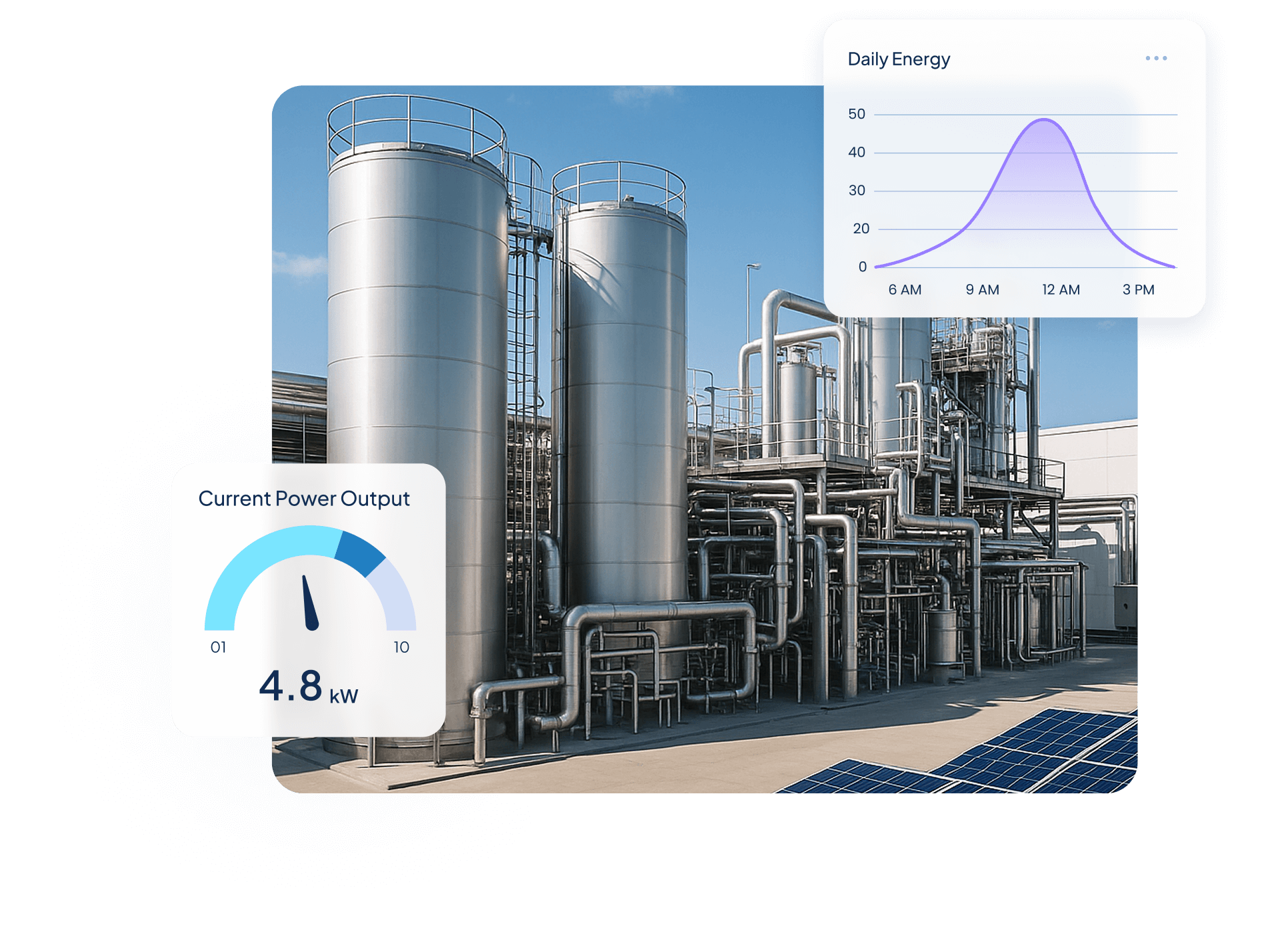
Prospect Control uses Ubidots to deliver remote tank level monitoring for industrial customers, replacing complex PLC/SCADA setups with a scalable, web-based IoT solution.
Results:

Darryl Schembri
General Manager
AIS Technology uses Ubidots to monitor electricity, water, and gas consumption across multi-tenant buildings, enabling real-time visibility, automated billing, and faster response to inefficiencies.
Results:


Onofre Tamargo
CEO & Cofounder
S4IoT uses Ubidots to remotely monitor irrigation systems in urban gardens, helping clients reduce maintenance costs, prevent plant loss, and shift from manual operations to a scalable subscription-based model.
Results:


Help & Support
Have questions about Ubidots? Here are some ofthe most common queries to help you get started.

Yes. Synthetic Variables compute efficiency ratios such as OEE directly from your machine data, with no code: availability from run and stop status, performance from cycle counts against ideal rates, and quality from good versus rejected parts. They can calculate in real time or over fixed intervals, such as per shift or per day, and the result is a regular variable you can chart, compare across lines, and use in alerts when performance drops.
Ubidots supports MQTT, HTTP, and Modbus, so PLCs, industrial gateways, and edge devices can send data without replacing your existing architecture. Equipment that already speaks Modbus typically connects through a gateway that forwards its registers to Ubidots. If your equipment produces a non-standard payload, UbiFunctions can decode it into Ubidots variables. Devices with an active MQTT connection can also receive commands and setpoint changes back from the platform.
Yes. Roles define what each user can view, create, edit, or delete, from dashboard-only access for operators to full management for engineers, and custom roles can match your own structure. In App Builder, you can hide platform features an audience doesn't need, so operators see a focused screen with only the dashboards and controls relevant to their line. Each plant or line can be its own organization, keeping access scoped to the right people.
Yes. Each plant can be its own organization, and users who need cross-site visibility can be granted access to several. Device Types standardize machine configurations so a new line is set up the same way in every plant, and Global Events, available on Industrial and Enterprise plans, apply one alert rule across your whole fleet instead of configuring each machine separately. Aggregation dashboards let you compare the same metric across machines side by side.